
There’s a specific gap in the morning that a normal outfit doesn’t cover: the hour between waking up and actually starting work, when you’re making coffee, checking the first few messages, maybe letting the dog out, and definitely not ready to commit to real clothes yet. Commuting used to force a hard line there — you got dressed because you were leaving the house. Working from home removes that line entirely, and a lot of people end up either getting dressed too early out of habit, or never quite getting dressed at all. A robe is the actual solution to this, not a spa accessory.
What a Robe Is Actually For, Practically
Setting aside the spa framing most robes get marketed with, the practical case is simple: it’s a layer you can throw on over whatever you slept in that makes you presentable enough to answer the door for a delivery, sit through an early call with the camera off, or just not be cold at 6am before the heat’s kicked in, without requiring you to actually get dressed yet. It’s a buffer between “asleep” and “working,” which working from home badly needs and mostly doesn’t have.
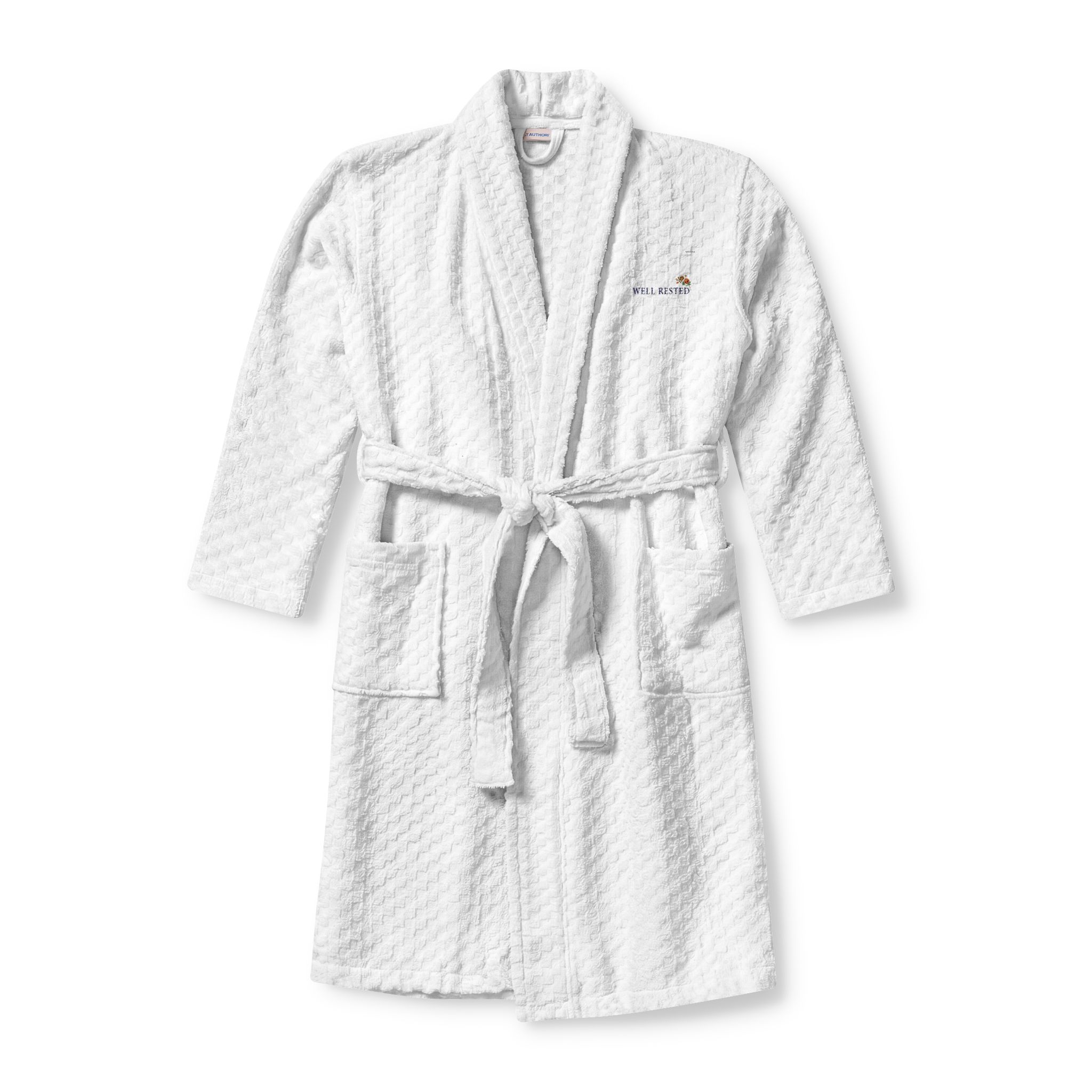
Terry Cloth vs. Everything Else
Robes come in a few standard fabrics, and they’re not interchangeable for a home-office context specifically. Silk and satin robes look nice in photos but offer almost no warmth and slide off the shoulder constantly, which is fine for ten minutes getting ready and bad for two hours of actually wearing one around the house. Fleece robes are warm but tend to run hot indoors once the heating kicks in, and they don’t breathe well if you’re moving around. Terry cloth splits the difference — absorbent and breathable like a towel, but structured enough to hold its shape and stay put, which matters if you’re going to wear it for an extended stretch rather than just wrapping up after a shower.
An embroidered terry shawl robe with a pocket covers the two details that actually matter in daily use and that most robes skip: a shawl collar that stays closed on its own without constant readjusting (unlike a simple wrap collar), and an actual pocket, which sounds minor until you’re holding a phone, coffee, and trying to open a door at the same time.
The Camera-Off Window
Most remote jobs have a predictable early window — a standup, a quick sync, an early email check — that doesn’t require being camera-ready, just present. A robe worn over lounge pants covers this window completely: warm enough to sit through a call with the heat not fully up yet, presentable enough to not worry about a surprise video request, and it comes off in about two seconds once you’re actually getting dressed for the parts of the day that need it.
Length and Fit for Actually Moving Around
A robe meant to be worn for an hour of actual movement — making coffee, letting a dog out, walking to a mailbox — needs a different fit than one meant for standing still in a bathroom for two minutes. A shawl collar that stays closed without a tight belt cinch matters here, since a robe that gapes open every time you bend down or reach for something defeats the purpose fairly quickly. Knee-length or just below tends to work better for actual movement than full-length, which can catch underfoot on stairs or trip you on a rug in a way that matters more than it sounds like until it happens once.
One Robe or Two, By Season
Terry cloth is a reasonable year-round choice since it breathes better than fleece, but a single heavier robe can still feel like too much in summer, especially in a warmer climate or a house without strong air conditioning. People who wear a robe daily, rather than occasionally, often end up keeping a lighter waffle-weave or thinner option for warmer months alongside a heavier one for winter, the same logic as rotating a bathrobe the way you’d rotate a jacket. It’s not necessary to start with two — most people realize they want a second one only after a full year of wearing the first through every season.
Making It Part of an Actual Routine
A robe that lives in a closet gets worn far less often than one hanging on a hook within arm’s reach of the bed or the coffee maker, purely from friction — the extra ten seconds of opening a closet door and finding a hanger is enough to make people skip it on a rushed morning. If mornings tend to be rushed, a hook near wherever the first ten minutes of the day actually happen makes it much more likely to become a genuine daily habit instead of something worn twice a month.
Robe or Cardigan: Which Actually Fits the Moment
A cardigan solves a slightly different problem than a robe, and it’s worth being clear about which one a given morning actually needs. A cardigan is meant to be worn over real clothes as a light layer — it doesn’t cover much on its own and assumes something presentable is already underneath. A robe is meant to be the outer layer over sleepwear or nothing much at all, which is exactly the situation in that first hour before getting dressed. Reaching for a cardigan too early in the morning, before actually being dressed underneath, tends to leave gaps a robe wouldn’t. The two aren’t competing for the same job — a cardigan is for later in the day over real clothes, a robe is for the specific window before that.
Some people do skip the robe stage entirely and go straight from pajamas to a full outfit, and that’s a completely reasonable approach too — the robe isn’t mandatory, it’s a solution for the specific discomfort of that early transition window, and it only earns its place in a routine if that transition window is actually a daily friction point rather than a hypothetical one.
Who a Robe Isn’t For
A robe-based morning routine assumes a level of privacy that not every home office has. Anyone sharing a house with roommates who aren’t family, working from a co-living space, or regularly having early client visitors in person rather than by video is operating under different constraints than someone alone in a house with their own household. In those situations, the same robe-and-loungewear approach can feel less appropriate, and it’s worth being honest that this whole category of advice assumes a reasonable amount of at-home privacy during the hours it applies to. Nothing here is a rule so much as a default worth adjusting to an actual living situation.
A Real Pocket Is a Bigger Deal Than It Sounds
It’s a small detail that’s easy to dismiss reading a product description and genuinely useful in daily practice: a robe pocket deep enough to actually hold a phone securely, rather than a shallow decorative pocket a phone slides right back out of, changes how the robe gets used day to day. Answering a door, checking a message while making coffee, carrying a phone from room to room without a free hand — all of it depends on the pocket actually working as storage rather than as a design detail. It’s one of the easiest things to overlook when comparing options and one of the first things people notice is missing once they’re living with a robe that doesn’t have it.
Washing a Robe Without Wrecking the Embroidery
A robe with embroidered detailing needs slightly more care than a plain terry robe, since high-heat drying and harsh detergents can cause embroidery thread to fray or the surrounding fabric to pucker over repeated washes. Cold water and a gentle cycle, followed by air drying or a low-heat tumble setting, keeps embroidered detail intact far longer than defaulting to a normal hot wash and high-heat dry cycle, which is easy to do out of habit with something that gets worn and washed as often as a daily robe does.
Frequently Asked Questions
Is a robe overkill if I already have a robe from a hotel or gift set?
Depends on the fabric and fit — most gift-set robes are one-size, thin, and built for occasional use rather than daily wear, so they tend to gap open and wear thin quickly under regular use. A robe meant for daily wear holds its shape and closure far longer.
Terry cloth robe or fleece robe for a cold house?
Terry cloth is the better daily-wear choice even in a cold house, since fleece tends to trap heat once you’re up and moving, leading to overheating rather than steady warmth. Terry breathes better across a full morning of activity.
Should I wear a robe over pajamas or lounge pants specifically?
Either works — the robe is an outer layer, not a replacement for what’s underneath. Lounge pants underneath tend to hold up better through a full morning of moving around than looser pajama pants, which can shift or bunch under a robe.
Once the robe comes off: what to wear for the rest of the day. Back to the full guide.