Offices are climate-controlled by someone whose job is climate control. Home offices are climate-controlled by whoever last touched the thermostat, which usually means the room you’re actually sitting in — often a converted bedroom, a corner of the living room, a basement — runs colder than the rest of the house and colder than any office ever did. Cold feet are the first sign, and they’re a bigger productivity problem than they sound like: sitting still for hours with cold feet is a genuinely different, worse experience than standing up and moving around occasionally, which is what an office day naturally includes and a desk day doesn’t.
Why Regular Socks Aren’t Enough at a Desk
Socks work fine when you’re moving, since walking generates enough circulation and friction to keep feet warm on their own. Sitting still for a full workday removes that — feet get cold from the floor up, especially on hardwood, tile, or laminate, all common in home offices that used to be something else. A sock alone doesn’t insulate against a cold floor the way a proper sole does; that’s the actual functional gap slippers close that socks don’t.
What Actually Matters in a Work-From-Home Slipper
Slippers built for occasional lounging and slippers built for eight hours of daily wear aren’t the same product, even when they look similar. Three things separate them:
- A real sole. Thin, flat-bottomed slippers are fine for a five-minute walk to the kitchen and start to hurt by hour three at a desk. A slipper with actual sole structure holds up the way a shoe would.
- Slip-on, not slip-in. Anything you have to fully step into rather than slide on gets skipped after the first few days, purely from friction — a slip-on you’ll actually put on every single morning without thinking about it.
- A closed-back or secure fit. Backless slippers shift and fall off during a normal workday of standing up, sitting down, reaching for things — a secure fit stays on through all of that instead of needing to be shuffled back into constantly.
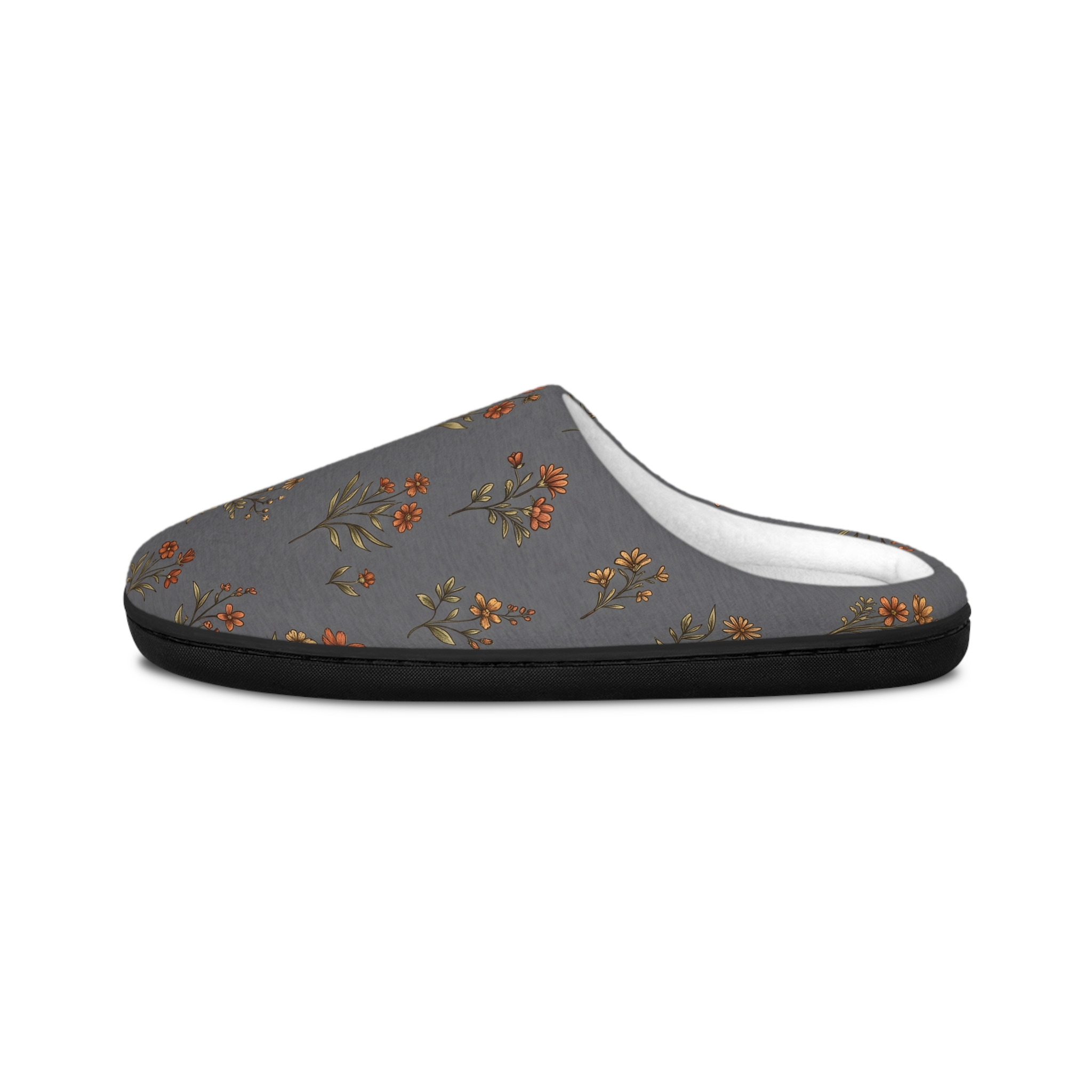
A pair of floral grey indoor slip-on house shoes covers this specific brief — built as daily house shoes rather than a once-in-a-while lounging accessory, with a slip-on design that doesn’t add friction to putting them on every morning.
Cold Feet Aren’t Just Uncomfortable
There’s a real, boring physiological reason cold feet matter beyond comfort: your body pulls circulation toward your core when your extremities get cold, which is part of why a cold desk day can leave you feeling more sluggish and less focused than a warm one, even with identical work. It’s a small effect per hour, but an eight-hour desk day is a lot of hours to compound it across.
Hardwood, Tile, and Carpet Aren’t the Same Problem
The flooring under a desk changes how much a slipper actually needs to do. Hardwood and tile conduct cold efficiently and offer no cushioning of their own, so the slipper is doing all the insulating and cushioning work by itself — a thin sole barely helps here. Carpet already provides some insulation and give, so the same thin slipper that fails on tile can feel adequate on carpet, which is part of why people’s experiences with the “same” slipper vary so much between houses. Anyone with hardwood or tile under a desk specifically should weight sole thickness more heavily than someone working from a carpeted room.
Can They Handle a Quick Trip Outside
A slipper with a real, grippy sole can usually handle a quick trip to the mailbox or the trash cans without issue, which matters during a workday when changing into real shoes for a thirty-second errand feels disproportionate. That said, a slipper is still not built for wet grass, gravel, or repeated outdoor use the way an actual shoe is — the sole material and tread depth on most slippers, even good ones, isn’t designed for it, and repeated outdoor wear will shorten the sole’s life noticeably faster than strictly indoor use.
Signs It’s Time to Replace Them
Daily desk-wear slippers compress and flatten faster than people expect, since eight hours of standing and sitting is a lot more cumulative pressure than the occasional evening wear most slippers are designed around. A flattened sole that no longer springs back after being pressed is the clearest sign it’s no longer doing its insulating job, even if the fabric on top still looks fine — the visible wear and the functional wear don’t always show up on the same timeline.
Memory Foam Versus a Structured Sole
Memory foam soles feel plush in a store or in a quick five-second test, but they compress under sustained weight faster than a firmer, more structured sole does, which matters specifically for a full desk day rather than occasional wear. A structured sole with some genuine support holds up better hour after hour, similar to the difference between a soft mattress topper and an actual supportive mattress — the soft option feels better for a moment and worse over a long stretch. For daily all-day wear specifically, a moderately firm sole with some cushioning tends to outperform a pure memory-foam sole on comfort by the end of the day, even though it feels less impressive in the first five seconds of trying it on.
None of this means memory foam slippers are a bad choice generally — for shorter periods of wear, evenings, or occasional use, they’re genuinely comfortable and often less expensive. The distinction matters specifically for anyone planning to wear the same pair for most of an eight-hour workday, which is a different use case than most slippers are designed and marketed around.
Sizing Down From a Regular Shoe Size
Slippers are typically worn without socks or with only thin socks, unlike regular shoes, which usually account for a sock’s thickness in their sizing. That’s the main reason many people end up sizing down half a size from their normal shoe size when buying slippers, rather than ordering their exact everyday size, which often runs slightly loose without a sock’s usual bulk taking up the extra room. A slipper that’s slightly loose doesn’t just feel sloppy — it also shifts more during a normal workday of standing and sitting, which undermines the secure, stay-put fit that makes a slipper worth wearing over socks alone for hours at a desk in the first place.
Washing Fabric Slippers Without Ruining Them
Fabric slippers worn daily pick up dirt and odor faster than occasional-use slippers, and how they’re cleaned depends heavily on the sole material. A machine wash on a gentle, cold cycle works for most fabric uppers, but the sole often shouldn’t go through a machine dryer, since heat can break down glue bonding or warp molded foam soles over time. Air drying, even though slower, protects the sole’s shape and lifespan far better than a quick trip through the dryer, which is worth the extra wait for anything worn daily and expected to last.
One Pair or a Second for Warmer Months
A fully enclosed, insulated slipper that feels perfect in January can feel too warm in July even indoors with air conditioning running. People who wear slippers daily year-round sometimes keep a lighter, more open pair for warmer months alongside a warmer one for winter, the same reasoning that applies to a seasonal robe. It’s not a requirement for everyone, but anyone in a climate with a real seasonal temperature swing will likely notice the difference after a full year with just one pair.
A Second Pair Near the Front Door
Keeping a single pair of slippers moving between a desk, the kitchen, and the door for packages means they’re rarely in the right place at the right moment. A second, cheaper pair kept specifically by the front door for quick answer-the-door moments means the main desk pair never has to leave the room they’re actually needed in — a small logistical fix that solves the recurring annoyance of slippers never being where they’re needed without much added cost.
Frequently Asked Questions
Are house slippers actually worth it over just wearing thick socks?
For an occasional cold morning, thick socks are fine. For daily desk wear on hard flooring, slippers with a real sole insulate against the floor itself, which socks alone can’t do — the cold transfers up through a sock on contact with a cold floor in a way it doesn’t through a proper sole.
How often should work-from-home slippers be replaced?
Daily-wear slippers see far more use than occasional ones, so expect the sole to compress and the fabric to wear noticeably faster — checking the sole for flattening every few months is a reasonable habit once they’re in daily rotation.
Do slip-on slippers stay on well enough for an active workday?
A secure, closed-back slip-on design is built to handle normal desk-day movement — standing, sitting, walking to another room — without falling off, unlike an open-backed slide style, which shifts more easily during that kind of regular movement.
Pairs with a robe for the coldest part of the morning: best robe for home office mornings. Back to the full guide.